Article: The Fascinating Food History of Bristol
The Fascinating Food History of Bristol
As an island, the UK has more than its share of sea ports, all of which have developed their own unique identities, as well as making substantial contributions to English culture.
One of the most famous of English ports is Bristol. The biggest city of the south west of England, Bristol was first recognised as a town in 1155 and within a century it had taken on significance as a port, thanks partially to significant improvements in the harbour, which took place in 1247, when the river Frome was diverted to the west, and a stone bridge constructed at the confluence of the Avon.
During the reign of Edward III (1327 to 1377) Bristol took on greater significance as a port, importing raw wool from Ireland along with manufactured woollen cloth, which it then sold to Spain and Portugal in return for sherry and port wine. This steadily growing trade meant that by the 16th century Bristol had become a major port, as well as a key manufacturing town, and a distribution centre for both overseas and inland trade.
Its position also meant the city played a notable part in maritime history. It was from Bristol that John Cabot sailed in 1497 on his famous voyage to North America. This maritime significance was recognised in 1552 when the Society of Merchant Venturers was incorporated in the city.
During the later 17th and the 18th centuries Bristol began to prosper as a processing centre for the vast quantities of sugar and tobacco imported from Britain's colonies in the Americas, to whom it supplied in return textiles, pottery, glass, and other manufactured goods.
The importation of Jamaican sugar combined with the trade in cacao from West Africa was responsible for the growth of the famous sugar houses of Bristol as well as the development of a thriving chocolate manufacturing business.
Fry's and the first chocolate bar
That chocolate trade produced something the rest of the world now takes for granted. In 1761 Joseph Fry, a Bristol Quaker, bought a small shop from an apothecary named Walter Churchman, and with it the patent for a chocolate refining process. The company that grew out of it, J. S. Fry and Sons, produced an eating chocolate called Chocolat Delicieux a Manger in 1847, and in 1866 launched Fry's Chocolate Cream, widely recognised as the first mass-produced chocolate bar in the world.
Fry's merged with Cadbury in 1919, and from 1923 production moved a few miles out of the city to Somerdale at Keynsham, where it carried on until the site closed in 2011. Bristol's chocolate trade ran for 250 years, and it began in a shop on a Bristol street. The English bean to bar makers working today are a long way from Fry's in scale, but they are working in a tradition the city started.
Decline, bombing and reinvention
The 19th century saw significant challenges to Bristol's maritime and trade pre-eminence. The rise of the Lancashire cotton industry combined with the natural limitation on shipping created by the Avon Gorge below Clifton, led to the loss of a great deal of Bristol's trade to Liverpool.
This relative economic decline was followed by the destruction of a large part of the city centre as a result of bombing during the Second World War. But out of this destruction, the city reinvented itself. Post-war reconstruction included a number of significant buildings, while the Royal Portbury Dock increased the capacity and versatility of the city's maritime trade.
Bristol now imports an astonishing range of goods including refined petroleum products, animal foodstuffs, and forest products, while the city exports a variety of manufactured goods from the West Midlands, most notably automobiles, tractors, and machinery.
Traditional local industries, including the refining of sugar, cocoa and chocolate making, wine bottling, porcelain, pottery making and the production of the fine glass known as Bristol Blue have continued, while there is also a notable aircraft design and construction industry in the city. Bristol's position as the major trade and cultural hub of the south west was strengthened by the construction of the Severn Bridge to the north of the city, along with the completion of the M4 motorway to south Wales.
This position as the major city of the south west has meant that Bristol has long been the point of sale for some of the many ranges of food and drink produced in nearby Somerset, as well as Devon, Cornwall and Gloucestershire. These home grown food delights, combined with the proliferation of global trade through the city have turned Bristol into one of the most interesting culinary locations in England, complete with a flourishing catering and restaurant industry.
Cider
If there is one thing that the south west of England is known for, it is cider. The orchards and cider making bases of Somerset are renowned all over the world for producing an astonishing array of high quality cider and perry, and naturally Bristol was the ideal location for cider makers, merchants and farmers to sell and export their wares. The result has been that Bristol is the most cider-friendly city in England. It is famous for its bewildering number of cider merchants and cider bars, where you can sample everything from award-winning ciders to ultra strong scrumpy and delicate perry.
Bath Buns
Bath isn't Bristol, but as with the cider making industry, Bristol benefitted from its close proximity to Bath, which meant many Bath food producers, including their bakers, sent their wares to the city for sale. The Bath bun is a sweet roll made from a milk-based yeast dough with crushed sugar sprinkled on top after the baking process is finished. The range of ingredients used has varied from lumps of sugar to candied fruit peel, currants, raisins or sultanas.
Originally, the bun was made with a rich butter and egg dough, which was then smothered in caraway seeds and multiple sugar layers. But in the middle of the 19th century, the recipe changed to a heavier, fruit-filled version, which proved to be extremely popular in Victorian England.
Mothering Buns
Mothering buns are a speciality of Bristol, and are traditionally made by local bakers the day before Mothering Sunday. The significance of the day is that in English tradition, the Christian Lent fast was relaxed for this one occasion, allowing people to treat themselves to foods that were normally off limits to those who were fasting. Originally, the buns were decorated with caraway or aniseed, but these toppings have been replaced by hundreds and thousands.
Cream Sherry
In the late 17th century, sweetened Oloroso sherry was hugely popular in England and was known as milk sherry or Bristol Milk, due to the fact that the majority of the sherry trade to England was passing through the port of Bristol. The city became known for mixing different types of wines together, to produce a sweet, smooth mixture.
Bristol Milk was already established as a generic form of drink, but in the 1860s, John Harvey, a wine maker whose father had started his business in 1796, created a new, richer blend that was deemed to be superior to Bristol Milk, and naturally became known as Cream Sherry.
The sherry is a blend of Amontillado, Oloroso and Fino sherries, combined with an element of Pedro Ximenez, to produce a darker, richer and smoother sherry than the original Bristol Milk. To emphasise its Bristolian origins, Harvey's Bristol Cream is still sold in traditional Bristol Blue bottles.
Clark's Pie
Originally developed in Wales, the Clark's Pie has become associated with the city of Bristol, and is one of the most distinctive of local foods. The exact recipe used in the pie filling is a closely guarded secret, although it includes beef, vegetables and gravy.
The Clark's pie stands out from the competition as it boasts a pastry that is thick enough not to require a foil tray when it is sold, and the thickness of the pastry also means that the pie can be picked up and eaten without knife and fork. Every pie is stamped with the word CLARPIE into the pastry and it is the ideal football or rugby match food.
The Clifton Sausage
Among its many links with the food industry, Bristol is known for its variety of pork products and one of the most famous expressions of this tradition is the Clifton Sausage. This restaurant opened in 2002 and has built up a strong following in the local area and across England, thanks to its array of sausage varieties. At any one time, there are six on the menu, including such delights as Gloucester Old Spot pork, lamb, mint and apricot, beef and Butcombe ale and even reindeer and cranberry. The sausages are served with either mash or champ, which is mash combined with chopped spring onion, as well as onion gravy for the ultimate English comfort food.
The West Country on a Bristol plate
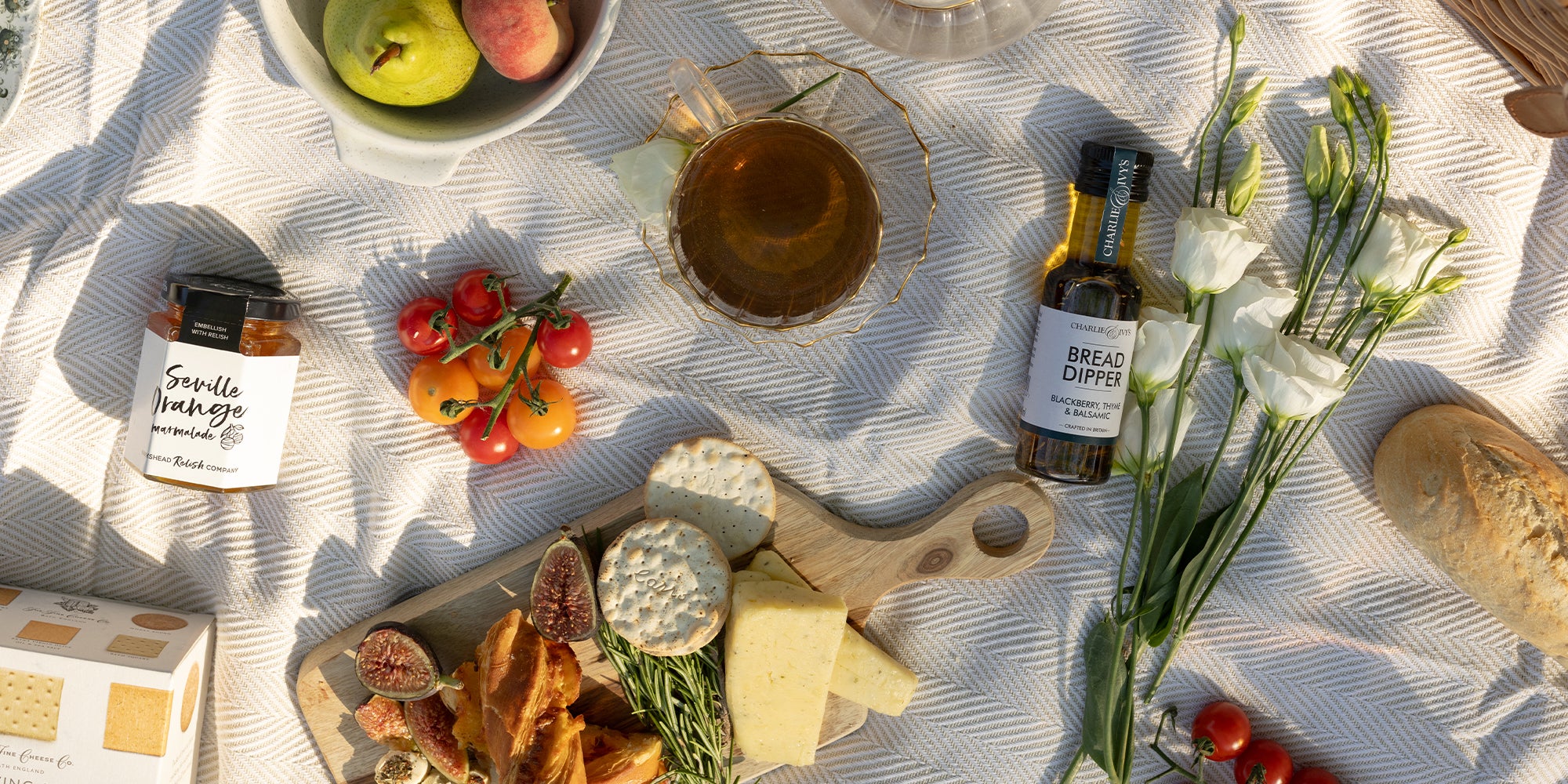
Bristol still works as the shop window for the food of the south west, and most of the makers behind it are within an hour or two of the city. Somerset sends its cheese, including the goat and ewe's milk cheeses of White Lake. Devon sends clothbound cheddar from Quicke's, who have been farming the same land since the 1540s. Dorset sends chocolate from Chococo, Cornwall sends Chocolarder and Cornish Sea Salt, and the county's sweet straws and piccalilli come from West Country Legends.
You can see the whole of the cheese counter and the rest of the food hall, all of it made in England, much of it made within sight of the Bristol Channel.